What "Hot-Fix" Actually Means
烫钻到底指什么
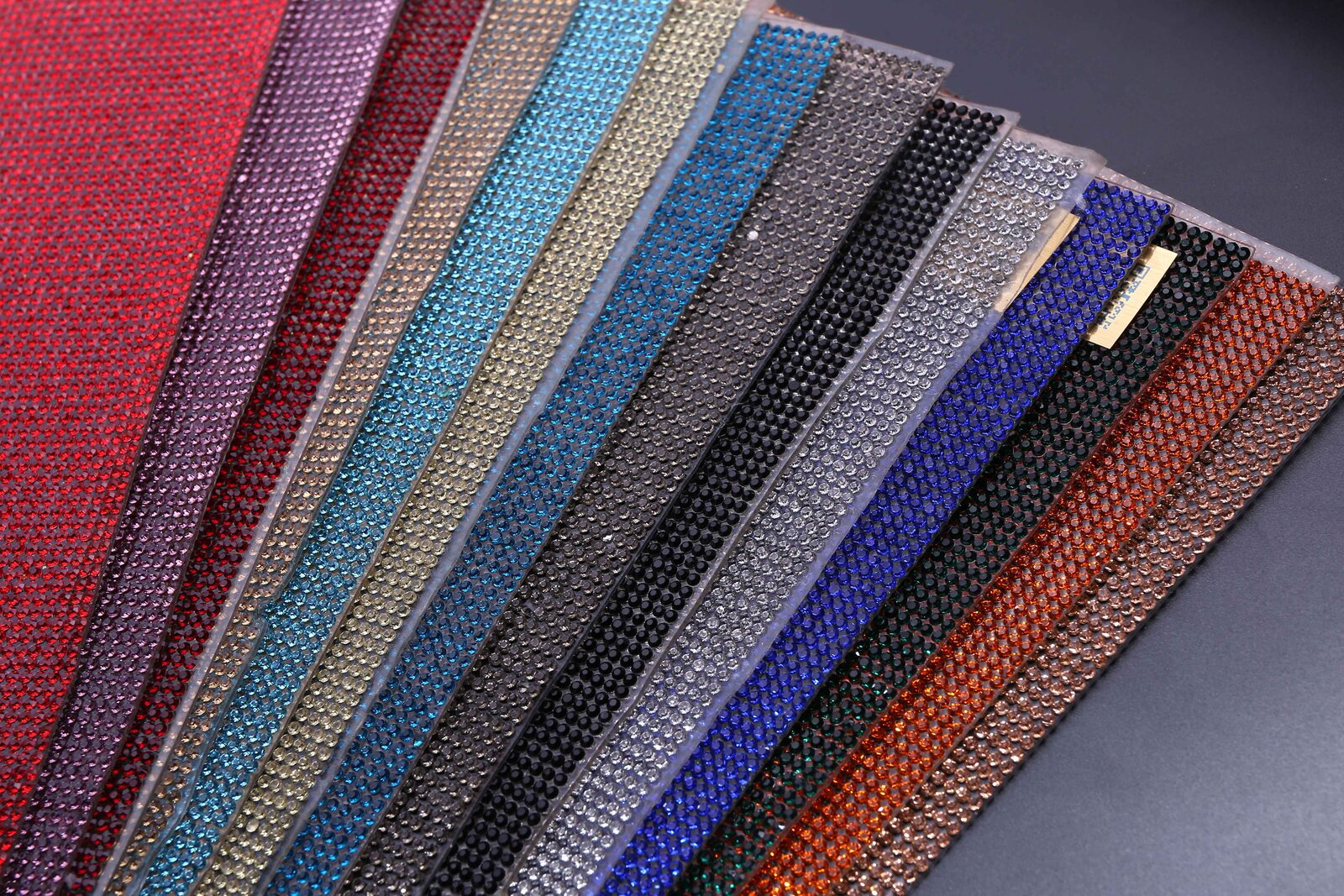
A hot-fix rhinestone carries its own adhesive. On the back of each stone, or under a sheet of Crystal Mesh, sits a layer of heat-activated glue that stays solid and tack-free until you bring it up to temperature. Apply heat and pressure together, the glue softens, flows into the weave of the fabric, then cools and locks. No separate adhesive, no curing rack, no solvent smell on the line.
烫钻自带胶。每颗钻背面,或者一整片 Crystal Mesh 晶网底下,压着一层遇热才激活的胶。常温下它是固态、不粘手的,等你把温度顶上去才起作用。热和压力一起下,胶变软、淌进面料的织纹里,冷下来就锁死。不用另配胶水,不用晾架,产线上也没有溶剂味。
That convenience is the whole point, and also where people get sloppy. The glue only does its job inside a narrow window. Too cool and it never fully melts into the fibers. Too hot and it scorches the backing or yellows the stone. The next three sections are that window, broken into the variables you can actually dial.
省事是它的卖点,也是大家容易松懈的地方。胶只在一个很窄的区间里干活。温度不够,它就没真正熔进纤维;温度过头,要么烤焦底布,要么把钻烤黄。下面三节讲的就是这个窗口,拆成你真正能去拧的几个旋钮。
The Three Variables: Temperature, Pressure, Dwell
三个变量:温度、压力、保压时间
Temperature does the melting. Most hot-fix glues activate somewhere between 150 and 170°C measured at the platen, but the number you set is not the number the glue feels. Heat has to pass through the stone or the mesh backing first, so a thick stone needs a higher setting or a longer press than a flat one. Always trust a test piece over a chart.
温度负责熔胶。多数烫钻胶在压板 150 到 170°C 之间激活,但你设的温度不等于胶感受到的温度。热得先穿过钻体或晶网底布,所以厚钻比扁钻要么调更高、要么压更久。永远信打样片,别只信参数表。
Pressure seats the stone. Light pressure leaves the glue sitting on the surface instead of biting into the fibers. Firm, even pressure pushes it in. On a flatbed press you want the whole platen loading evenly. A hand iron almost never gives you that, which is why irons are fine for a repair but risky for a production run.
压力负责把钻坐进去。压力轻,胶只浮在表面,没咬进纤维;压力够、又匀,才能把胶顶进去。平板压机要让整块压板均匀受力。手熨斗几乎给不了这种均匀,所以补一两颗可以,整批生产就有风险。
Dwell is how long the two stay clamped, usually in the range of 10 to 20 seconds. Short dwell on a heavy fabric like denim or a structured shoe upper leaves the core of the glue cold. The fix is rarely more heat; it is a few more seconds. After the press, leave the piece flat until it cools. Peeling the carrier tape while the glue is still warm pulls stones with it.
保压是两者夹在一起的时长,通常 10 到 20 秒。牛仔布、定型鞋面这类厚料,保压太短,胶芯还是冷的。解法往往不是加温,而是多压几秒。压完让工件平放到凉透。胶还温着就撕载体膜,会把钻一起带下来。
Matching Equipment to Run Size
设备按批量来配
The right machine is mostly a question of how many pieces you run and how flat they are.
机器选得对不对,主要看你跑多少件、件平不平。
For sampling and small repairs, a handheld hot-fix wand reaches single stones and tight spots a press can't. It is slow and inconsistent across a batch, so treat it as a touch-up tool, not a production method.
打样和零星修补,手持烫钻笔能点到单颗钻和压机够不着的死角。它慢,整批之间也不稳,当补漏工具用,别拿来生产。
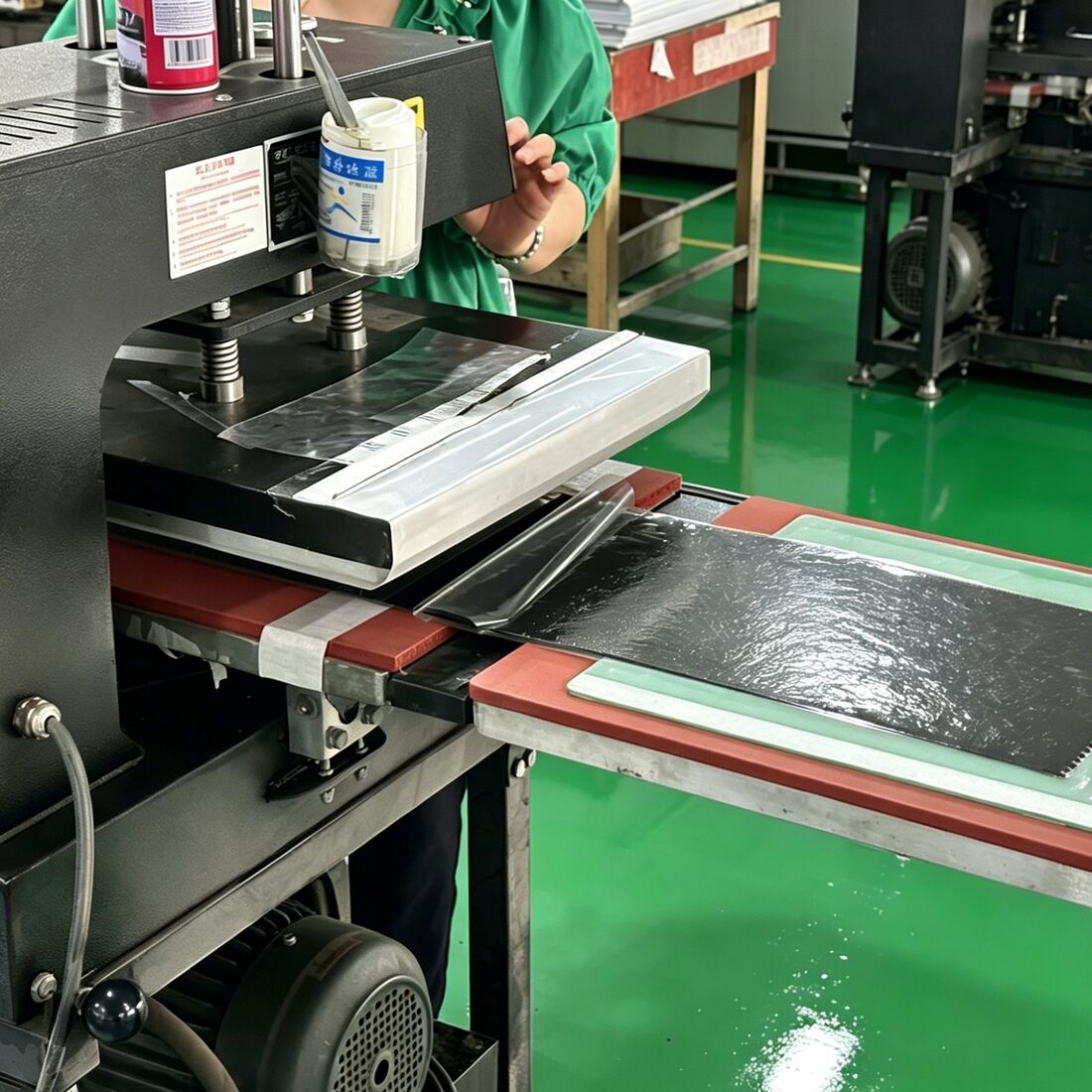
A flatbed heat press is the workhorse for garment panels, Crystal Mesh sheets and most patch work. You control temperature, pressure and dwell independently, and the results repeat. For high volume on flat goods, a conveyor tunnel press feeds piece after piece at a fixed setting, which keeps a long reorder consistent from the first meter to the last.
平板压机是主力,干衣片、Crystal Mesh 晶网和大多数贴片活儿。温度、压力、时间各调各的,结果还能复现。平面货走量大,就上隧道传送压机,一件接一件按固定参数喂,让长单从第一米到最后一米都一个样。
Curved or three-dimensional pieces, like a shaped heel counter, often need a contoured pad or a clamshell that follows the form. A flat platen on a curved part presses hard in the middle and barely touches the edges, and that is exactly where stones fall off later.
弧面或立体件,比如成型的后跟杯,常常得配贴合形状的弧形垫或随形的翻盖。平压板压弧面,中间压死、边上几乎没碰到,而那恰恰就是日后掉钻的地方。
Read the Substrate Before You Set the Dial
调参数前先看面料
The fabric decides as much as the machine. Leather and coated synthetics hold heat and can scorch, so they want a lower temperature and a protective sheet between the platen and the surface. Open weaves and satin let the glue flow in easily but show every drop of squeeze-out, so back the pressure off slightly. Heavy denim and webbing soak up heat and need the longer end of the dwell range.
面料的话语权不比机器小。皮革和涂层合成料存热、容易焦,要降温,压板和表面之间还得垫张保护膜。疏织和缎面让胶很好渗,但每一点溢胶都看得见,压力就稍收一点。厚牛仔、织带吸热,保压要往长里取。
Stretch fabrics are their own case. If the panel will be pulled over a last or worn under tension, apply the stones relaxed, never stretched. Stones set onto stretched cloth crowd together and shear the glue line when the fabric returns to shape.
弹力料是单独一档。要是这块布日后会绷上楦头、或者穿着时受拉,就在松弛状态下烫钻,绝不要绷着烫。绷着烫的钻,布一回弹就挤作一团,把胶线剪开。
When Hot-Fix Is the Wrong Call
什么时候烫钻是错的选择
Hot-fix is not universal. Very heat-sensitive fabrics, some sequined or metallic grounds, and pieces that will see industrial laundering are better served by sew-on settings or claw-mounted rhinestone trim. If a buyer needs the stones to survive repeated hot washing and tumble drying, that is a conversation to have before tooling, not after the first return.
烫钻不是万能。特别怕热的面料、某些亮片或金属底,以及要走工业水洗的成品,更适合缝钉款或爪镶水钻辅料。买家要是要钻扛得住反复热洗加滚筒烘,这事得在开模前谈,别等第一批退货回来才谈。
We supply hot-fix and non-hot-fix versions across the rhinestone lines, and we send tested temperature, pressure and dwell settings with sample cards so your line starts from a known-good point instead of guessing. The fastest way to dial in a new fabric is to press a few test stones, wash them, and check before committing the run.
我们各条水钻产品线都备烫钻与非烫钻两种版本,样卡随附测好的温度、压力、保压参数,让你的产线从一个已知靠谱的点起步,而不是靠猜。新面料最快的定参办法,就是先烫几颗测试钻、下水洗、确认了再上整批。