Why the Spec Sheet Is the Real Order
为什么规格表才是真正的订单
A photo sells the trim. The spec sheet is what actually ships. When a rhinestone order goes wrong, the problem is almost never the picture both sides liked. It's a field somebody read loosely: a size assumed instead of stated, a base left blank, an adhesive nobody confirmed against the fabric. The sheet is where a sample turns into thousands of identical pieces, so reading it precisely is the cheapest quality control you have.
照片卖的是辅料,规格表发的才是货。一笔水钻订单出问题,几乎从来不是双方都看中的那张图,而是某个被读得太松的字段:尺寸靠猜没写死,基底栏空着,背胶没人拿去对过面料。规格表,是一件样品变成成千上万件一模一样成品的地方,所以把它读准,是你能拿到的最便宜的质检。
Four fields carry most of the weight: size, density, base and adhesive. Get those four locked and the rest of the sheet is detail. The sections below take them one at a time, in the order a buyer should check them.
四个字段扛住了大部分分量:尺寸、密度、基底、背胶。把这四个锁死,规格表剩下的都是细节。下面按买家该核对的顺序,一个一个讲。
Size: Read SS and Millimeters Together
尺寸:SS 和毫米要一起读
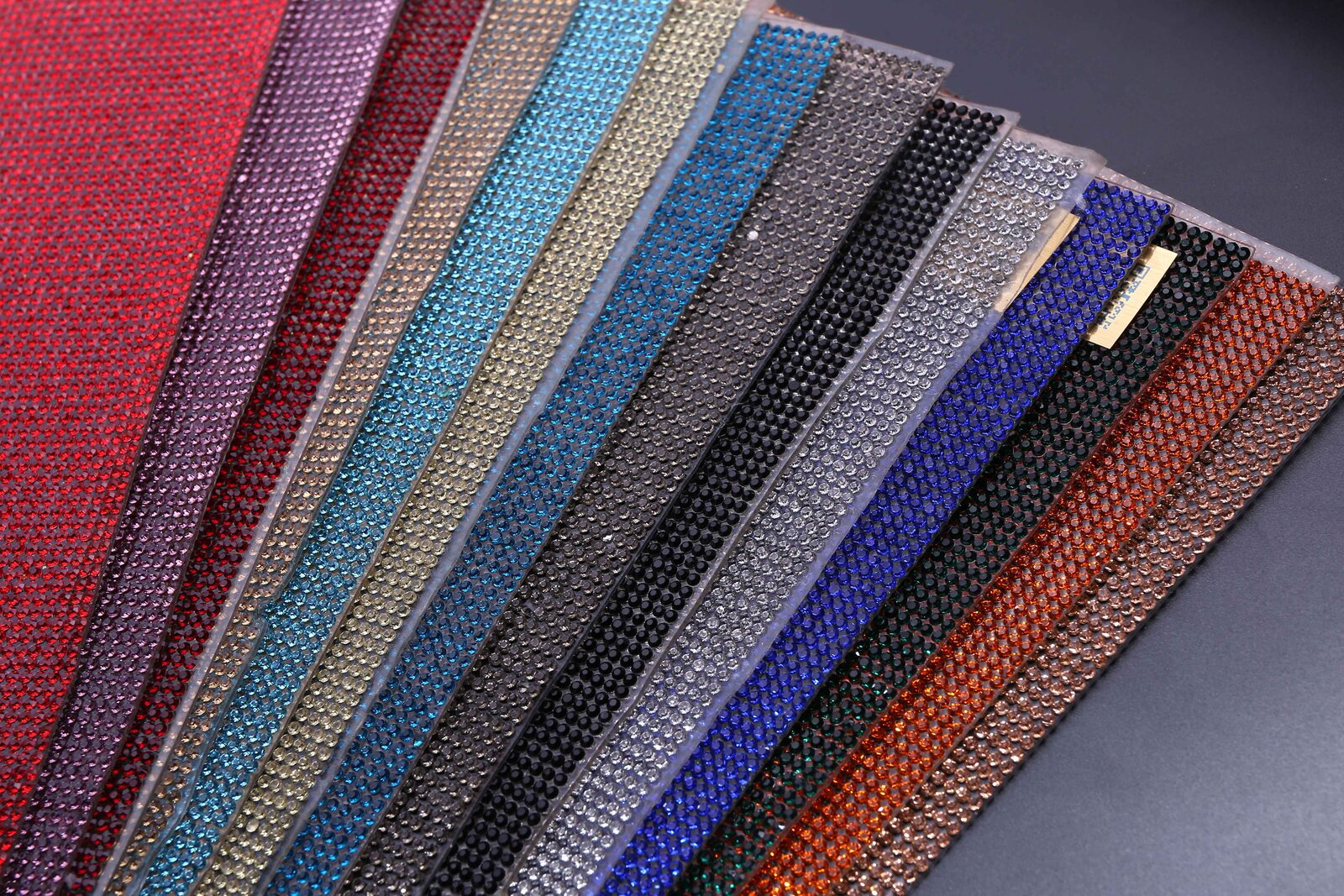
Stone size shows up two ways, and a good sheet gives both. SS (stone size) is the trade scale: SS6, SS10, SS16 and so on, each step a fixed diameter band. Millimeters are the plain measurement underneath it. Trouble starts when a sheet lists only one, or when a supplier's SS rounding doesn't match yours. SS10 should read close to 2.7 to 2.8 mm; if your records say 2.9, you're already drifting.
钻的尺寸有两种写法,一份好的规格表两个都给。SS(stone size)是行业刻度:SS6、SS10、SS16 等等,每一档对应一个固定的直径区间。毫米是它底下那个朴素的实测值。麻烦从这里开始:规格表只列其中一个,或者供应商的 SS 取整跟你的对不上。SS10 应该读到 2.7 到 2.8 毫米左右;如果你的记录写的是 2.9,那已经在漂了。
For mixed-size designs, the sheet should name every size in the layout, not just the dominant one. A motif described as "SS10 with SS6 fill" tells the factory exactly what to set. "Assorted small stones" does not, and that gap is where two batches stop matching. Always ask for the millimeter value next to the SS code, and check it against your own size chart before you approve.
碰上混尺寸的设计,规格表要把排版里每一种尺寸都点出来,而不只是主钻。一个写成"SS10 配 SS6 填充"的纹样,能告诉工厂到底镶什么。"杂小钻"不行,两个批次对不上,缺口就在这儿。永远要 SS 编号旁边的毫米数,确认前先拿它对一遍你自己的尺寸表。
Density: How Much Sparkle Per Area
密度:单位面积上有多少闪
Density is the field buyers misread most, because it sounds soft and it isn't. On a sheet-based product like Crystal Mesh, density is the real variable: the base panel size stays fixed and the stone count across it is what changes the look, the weight and the price. A denser set sparkles harder and costs more in both stones and labor. A lighter set reads cleaner and runs cheaper. Neither is better until you fix the look you're after.
密度是买家最常读错的字段,因为它听起来很软,其实不是。在 Crystal Mesh 这类以片为单位的产品上,密度才是真正的变量:底版尺寸固定,片上铺多少颗钻,才决定了观感、重量和价格。铺得密,闪得狠,钻和工时两头都贵;铺得疏,看起来更干净,跑起来更便宜。在你把想要的效果定死之前,没有哪个更好。
A spec sheet should pin density to something measurable: stones per row, rows per panel, or a sample swatch you both hold. We keep an extensive density library precisely so a buyer can match an existing reference instead of describing sparkle in words. If your sheet says only "full coverage" or "medium density," send it back and ask which reference swatch it maps to. Words drift between two factories; a numbered swatch does not.
规格表该把密度钉到能量的东西上:每排几颗、每版几排,或者双方各拿一张的样卡。我们维护一套完整的密度库,正是为了让买家能去对一个已有的参照,而不是用形容词描述闪度。如果你的规格表只写"满铺"或"中等密度",退回去,问它对应哪一张参照样卡。形容词在两家工厂之间会漂,一张带编号的样卡不会。
Base: What the Stones Actually Sit On
基底:钻到底坐在什么上面
The base is the field most often left vague, and it decides how the trim behaves long after the stones are set. A rhinestone sheet might sit on a flexible mesh, a satin band, a PVC strip or a die-cut backing, and each one drapes, cuts and bonds differently. Diamond Lace on a soft mesh follows a curved neckline; the same stones on a stiff base will not. The base is not a footnote. It's half the product.
基底是最常被写得含糊的字段,而它决定了钻镶好以后很久,这条辅料的脾气。一张水钻片可以坐在弹性胶网、缎带、PVC 条或刀模底材上,每一种的垂感、裁切和粘合都不一样。坐在软网上的 Diamond Lace 能顺着弧形领口走;同样的钻放在硬底上就不行。基底不是脚注,它是产品的一半。
A complete sheet names the base material, its color and its thickness or hand. Backing color matters more than buyers expect: under transparent and AB-coated stones, a dark base reads deeper while a white base lifts the sparkle. Confirm the base on the approved sample, not just the stones, because a factory that swaps a mesh for a cheaper backing can change the whole feel while every stone stays technically correct.
一份完整的规格表会写明基底的材质、颜色和厚度或手感。背衬颜色比买家以为的更要紧:在透明钻和 AB 镀层钻底下,深色基底读起来更沉,白色基底把闪度抬起来。确认样要连基底一起确认,不能只看钻;因为一家工厂把胶网换成更便宜的背衬,每一颗钻在技术上都还对,整体手感却变了。
Adhesive and Backing: How It Attaches
背胶与底背:它怎么固定上去
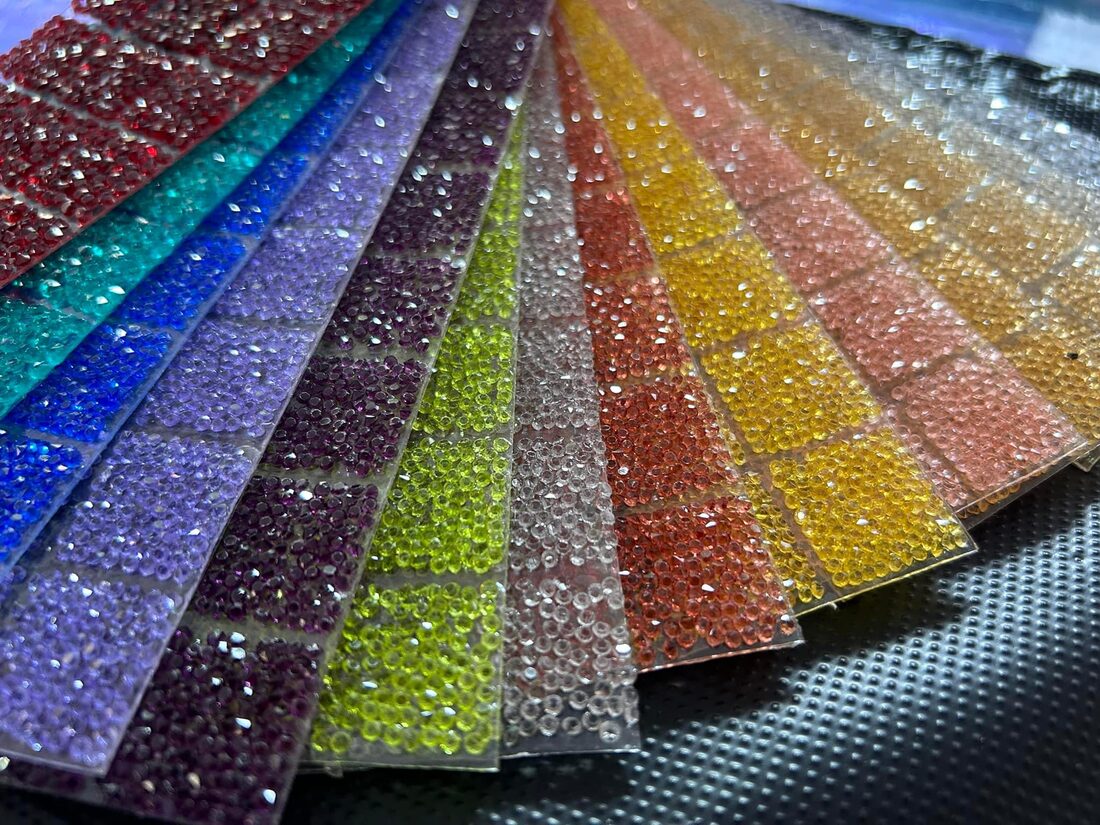
The adhesive field tells you how the trim joins the product, and it has to match the surface it's going onto. Hot-fix backing carries its own glue that melts under a press and suits heat-safe fabrics. Self-adhesive backing peels and sticks with no equipment, good for samples, metal and acrylic. Sew-on or claw-set rhinestones skip glue entirely and anchor by thread or prong. A sheet that just says "adhesive backing" hasn't told you which of these you're buying.
背胶字段告诉你这条辅料怎么接到产品上,而它必须跟要贴的那个表面对得上。热熔背胶自带胶,热压下熔开,适合耐热面料。自背胶撕开就贴,不用设备,适合打样、金属和亚克力。缝钻和爪镶水钻干脆不用胶,靠线或爪固定。一份只写"带背胶"的规格表,根本没告诉你买的是哪一种。
The field should also state the surface the supplier validated the bond on. "Hot-fix, tested on PU leather" means something. "Strong adhesive" means nothing you can hold a batch to. If the trim goes onto leather, coated textile or anything that can't take a press, the sheet should call for a cold or self-adhesive route and note a cure time. Match the backing to the fabric on paper, then prove it on the sample with a pull or wash test before bulk runs.
这个字段还该写明供应商在什么表面上验过这层粘合。"热熔,PU 皮上实测过"是有意义的;"强力背胶"则没有任何你能拿去约束批次的东西。如果辅料要贴到皮革、涂层织物或任何受不了热压的东西上,规格表就该指定冷胶或自背胶路线,并标出固化时间。先在纸面上把背胶配到面料,再在样品上用拉拔或水洗测试证明,然后才上大货。
Reading the Whole Sheet as One Order
把整张规格表当成一笔订单来读
The four fields aren't independent. Size sets how density reads, the base limits which adhesive can work, and the adhesive narrows which fabrics the whole trim can serve. Read them as a chain, not a checklist. A SS16 stone at high density on a soft mesh with hot-fix backing is a specific, buildable product. Change any one field and you may have changed the price band, the drape, or whether it survives the wash.
这四个字段并不各自独立。尺寸决定密度怎么读,基底限制哪种背胶能用,背胶又收窄了整条辅料能服务哪些面料。把它们当成一条链读,不是一张勾选表。SS16 的钻、高密度、坐在软胶网上、配热熔背胶,是一个具体、能做出来的产品。改动任何一个字段,你可能就改了价格区间、垂感,或者它过不过得了水洗。
Before you approve, run the sheet against the approved sample one field at a time, and write the millimeter value, the density reference, the named base and the validated adhesive into the order. The list below is the minimum to confirm in writing.
确认前,拿规格表对照确认样,一个字段一个字段地走,把毫米数、密度参照、点了名的基底、验过的背胶写进订单。下面这份清单是书面确认的下限。
- Stone size in both SS and millimeters, for every size in the design.
- Density tied to a numbered reference swatch, not an adjective.
- Base material, color and thickness, confirmed on the physical sample.
- Adhesive or attachment type, plus the surface it was tested on.
- A pull or wash test on the confirmed sample before the bulk run.
中文清单如下:
- 钻的尺寸 SS 和毫米都要,设计里每一种尺寸都列。
- 密度绑定到一张带编号的参照样卡,不要用形容词。
- 基底的材质、颜色和厚度,在实物样品上确认。
- 背胶或固定方式,加上它在什么表面上测过。
- 大货前,在确认样上做一次拉拔或水洗测试。
A spec sheet read this way stops being paperwork and becomes the contract for what arrives. Bring these four fields to the table filled in, and a supplier who runs the full range of rhinestone trims can confirm in one pass that the sheet, the sample and the bulk order all describe the same thing.
这样读出来的规格表,就不再是文书,而是到货标准的合同。把这四个字段填齐了摆上桌,一家能跑全套水钻辅料的供应商,一遍就能确认:规格表、样品、大货订单,说的是同一件东西。