01 · The Production Step Comes First
On a sample table they look alike. On a production line they aren’t.
样品台上看着一样 · 进了产线就不是同一个决定
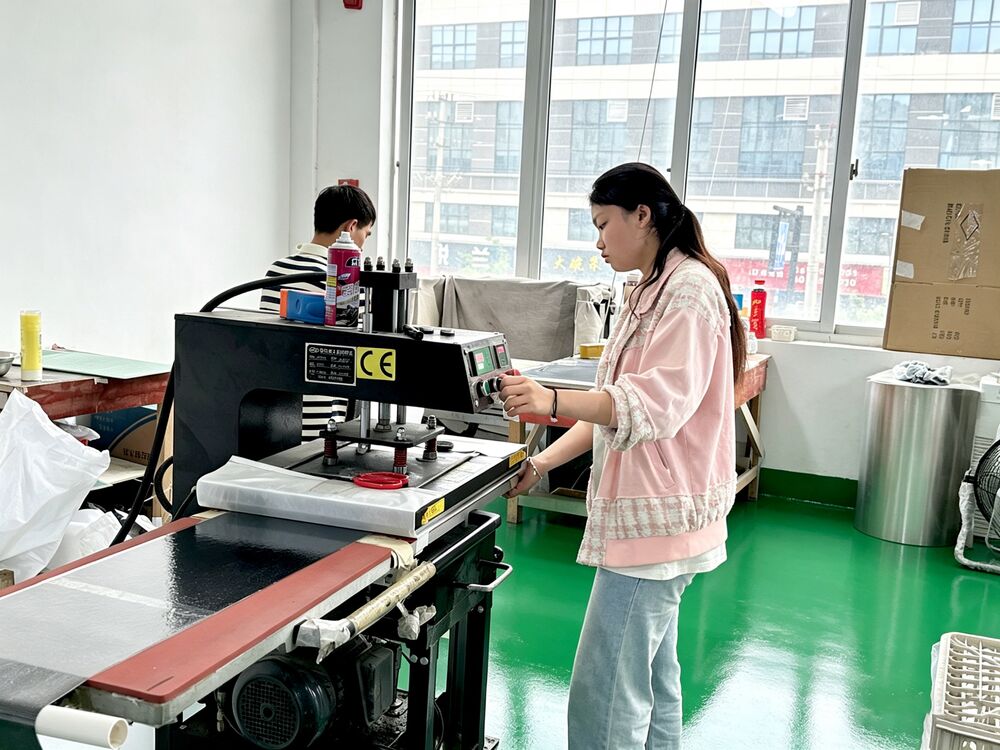
On a finished sample, hot-fix and sew-on decoration can both read as “sparkle.” On a production line, they’re not the same decision. Hot-fix asks whether the receiving material, heat process, pressure window, and surface area are suitable for bonding. Sew-on asks whether the base has the body and edge structure needed for stitching without distorting the decoration.
对成品视觉来说,热压与缝制都可能只是"有钻、有亮点"。进入产线以后,它们不是同一个决定。热压要先判断承接材料、温度、压力、受热面积能不能配合;缝制要先判断辅料本身有没有足够的结构、边缘和底层能不能承受针线固定。
02 · When Hot-Fix Wins
Hot-fix belongs where surface bonding is the job.
表面贴合是核心任务时 · 热压更合适
Hot-fix is useful when the decoration is meant to land as a flat or shaped surface element on a compatible base. The buyer wants an efficient attachment step and a clean visual finish — without turning the trim into a stitched structural part. In LOCA’s system, that conversation naturally appears around flexible adhesive-backed trim, hot-fix motifs, and certain shoe-patch applications.
当装饰是要作为一个表面元素落到合适基材上,热压就合适:固定 · 但不一定要成为被针线穿过的结构件。在乐卡的体系里,这类讨论常出现在柔性胶底条带、热压图案件,以及部分鞋贴应用里。
Routes in the LOCA system: Diamond Lace hot-melt variant, Diamond Flower with hot-fix finishing, Diamond Patch hot-melt base.
乐卡体系里对应路径:水钻抽条热熔胶版、钻花含 hot-fix 工艺、钻贴热熔胶底款。
03 · When Sew-On Wins
Sew-on belongs where the accessory must carry movement.
辅料要承受动作 · 缝制更稳
Sew-on or stitch-down logic gets stronger when the decoration must follow a shoe strap, survive repeated flexing, or join a factory process where sewing already controls alignment. A fabric-backed trim with the right internal body gives the factory more than brightness: it gives a line that can be held, guided, and fixed.
当辅料要沿鞋带走、要承受反复弯折、或者要进入一个本来就靠缝制控制位置的鞋厂流程时,缝制逻辑通常更强。带布底、带结构的条带给工厂的不只是亮度,还给出一条能被抓住、被引导、被稳定固定的线。
Routes in the LOCA system: Diamond Rope with fabric back and selectable inner core; Diamond Flower with sew-on finishing.
乐卡体系里对应路径:水钻抽条(布底 + 可选内层)、钻花含 sew-on 工艺。
04 · Adhesive Isn’t One Word
Hot-fix, iron-on, self-adhesive, glue-on — they’re not the same.
hotfix / iron-on / self-adhesive / glue-on 不是同义词
Buyers often group “hotfix,” “iron-on,” “self-adhesive,” and “glue-on” together because they all sound like “no sewing.” They aren’t interchangeable. A buyer brief should name the attachment method, the base material, the expected handling after application, and whether the order is for a trial sample or a repeatable production route.
客户很容易把 hotfix / iron-on / self-adhesive / glue-on 都归成"不用缝"。搜索时可以理解,打样时不够。brief 至少要说清:固定方式、承接基材、成品后续会怎么被使用,以及这次是试样还是要跑稳定产线。
Adhesive routes inside LOCA
Two adhesive systems · one base structure family.
LOCA ships flexible-base products with either a hot-melt base (activated by heat-press) or a 513 double-sided sticker base (peel-and-stick, no heat). Both belong to the same flexible-adhesive structure family. The right one depends on the receiving material and whether the production line wants heat-press or peel-and-stick handling.
05 · A Quick Choosing Table
End use first, then product.
先看用途 · 再选产品
06 · What to Send Before Sampling
Five things shorten the first sample round.
询盘时先带这五样东西 · 能缩短第一轮打样
Send five items with the first inquiry:
- Finished-product photo or sketch
- The receiving base material
- Desired location and approximate size
- Preferred application route if known (hot-fix · self-adhesive · sew-on · sticker)
- Any bend, wear, washing, or handling expectation that matters
询盘时先带上五样东西:
- 成品图或草图
- 被装饰的基材
- 装饰位置与大致尺寸
- 已知的应用方式偏好(热压 · 自粘 · 缝制 · 贴)
- 对弯折、穿着、洗护或操作强度的关键要求